Training Tutors in the College of Systems and Society, Semester 1, 2026
27 Feb '26
I’ve just wrapped up five training sessions for around 130 tutors (small group teachers) across the College of Systems and Society: two full-day sessions for new starters and three two-hour refresher sessions for returning tutors (and there’s one extra session to come for late-comers). It’s an exhausting but rewarding process. I’ve now been reflecting on our tutor’s needs and how we can activate their knowledge and experience to provide a better student experience across our College.
For the curious, my training materials are available online and updated every semester: https://cpmpercussion.github.io/soco-tutor-training/
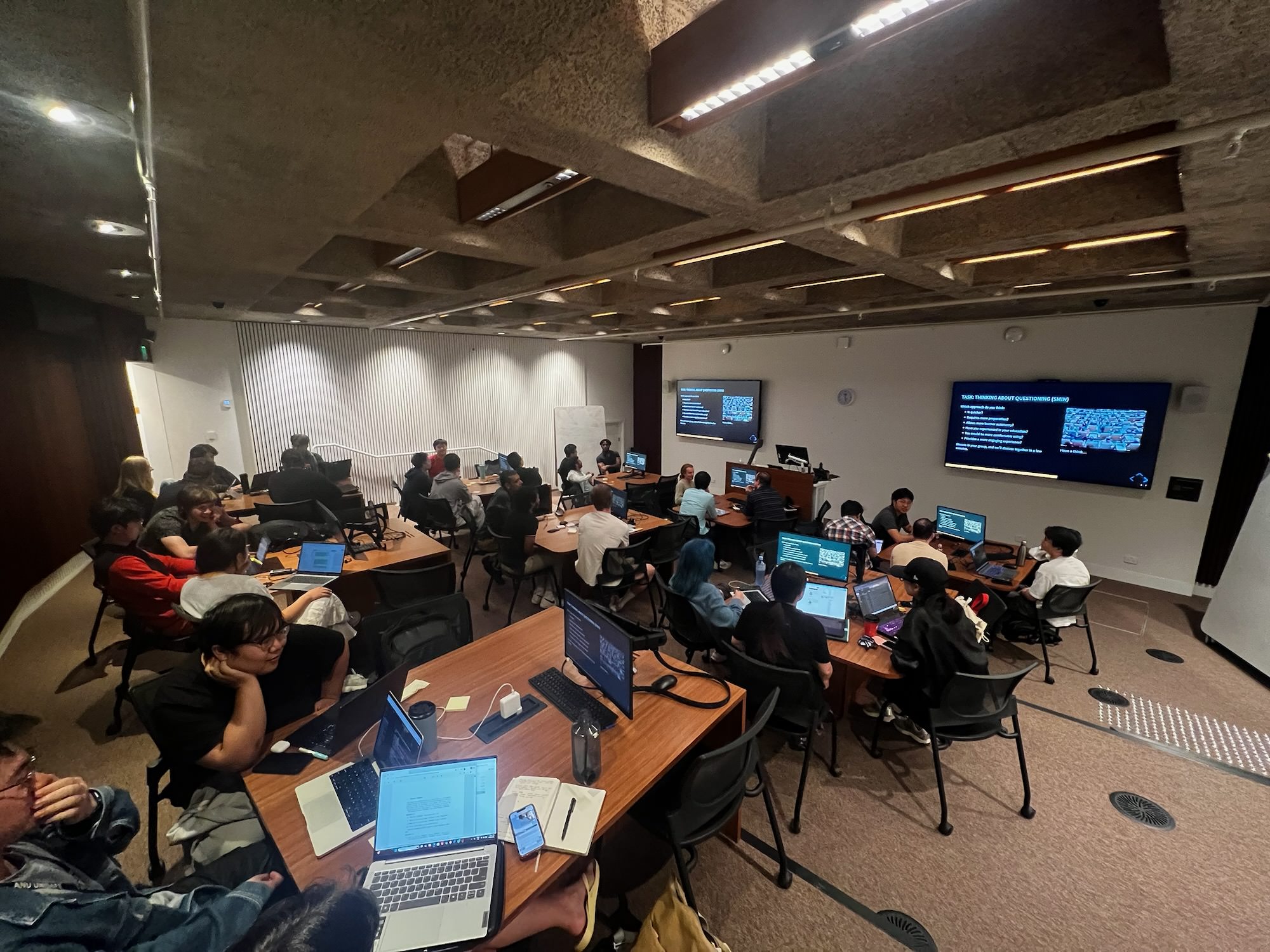
The Cohort
One of the things that struck me most this year was the sheer range of experience in the room. Some participants were completely new to teaching in a formal setting, just about to step in front of a class for the first time. Others had been tutoring for over thirty years. Getting folks at different career points into the same conversation, even briefly, was super valuable.
The refresher sessions were new this year, introduced to provide yearly continuing professional development for tutors who’d already completed initial training. In 2025 I trained around 90 new tutors across the college but in just this semester (with the refresher sessions) that grew to around 130. Adding the refresher strand felt like a meaningful step toward continued support for quality teaching.
New Tutors
New tutors came in with a lot of anxiety about the “right answer”. These folks were worried about being caught out, not knowing how to help a struggling student, giving the wrong mark to an assessment, or being exposed as someone who doesn’t know everything (of course all teachers know everything!). This is completely normal and comes up every time. Much of the first day is really about reframing that anxiety. Tutors don’t need to know everything, but it’s good to have strategies to help students do the learning themselves (e.g., questioning) and to have systems for consistent grading and feedback standards (e.g., rubrics, moderation, etc).
What struck me this year was how strongly some new tutors drew on their own experiences as learners to advocate for more inclusive classrooms. Many had been in non-inclusive learning environments and were now motivated to do better. That instinct is a genuine asset, and the inclusive teaching session gave them a framework (inspired by the UniReady toolkit) for turning it into practice.
Returning Tutors
The refresher sessions opened up a different kind of conversation. Experienced tutors were often juggling casual roles across multiple courses and sometimes multiple institutions, a reality that creates real friction when it comes to preparation, consistency, and building relationships with students and convenors. Making space to talk about that openly felt important.
Many returning tutors were also dealing with something that doesn’t get discussed enough: teaching material they hadn’t taught before, or stepping back into a subject after a gap. The High Impact Teaching Strategies session worked well here. It gave experienced tutors a shared language for thinking about what they were already doing intuitively, and some structured ways to extend their practice.
A note about the venue
I’ve been facilitating tutor training in the ANU Birch Building’s (beautiful) Interactive Theatre. In addition to feeling that you’re in a secret society’s underground training facility, it’s an ideal space for teaching involving content, discussion, and feedback live from groups. I feel a much better connection with everybody attending when I can step in between tables and talk with each group. I’d love to use this space for my regular computing teaching, but my classes of 200-300 students won’t fit in a room with 45 seats! An ongoing question: how can I reframe teaching at scale to involve better connections with students in a 1:45 location?
Next steps
Running refresher sessions alongside new-starter training is something I’d like to continue and grow. Our teaching changes over time and I want to take advantage of these sessions to build communication between tutors and hear their reflections on best practices. The goal, as always, is to make our teaching ✨awesome✨ and to see the impact in our student’s experience.