Dream Tent: a sonic reconstruction of a 19th-century mind therapy device
17 Sep '25
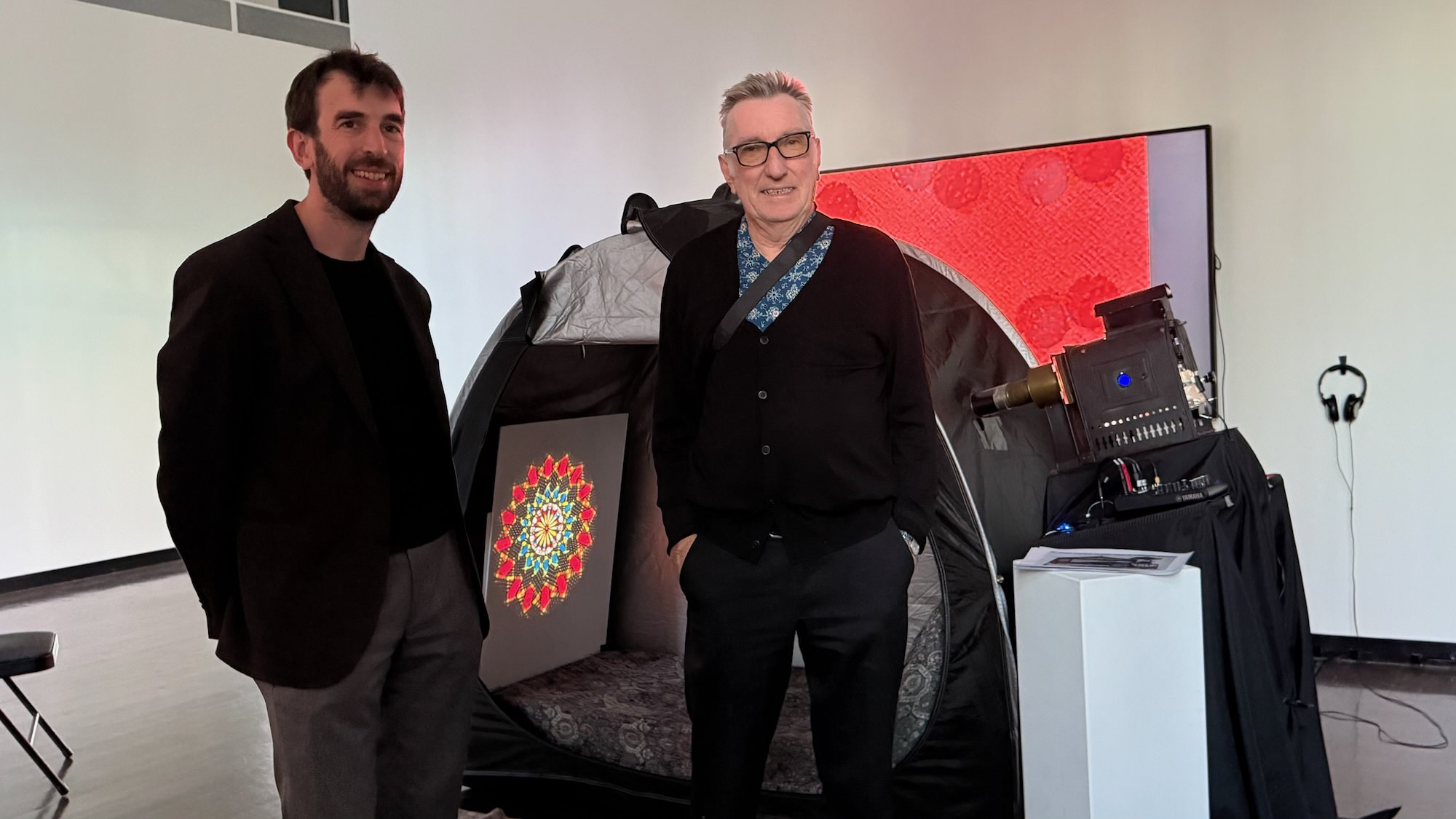
Recently, Martyn Jolly and I debuted our Dream Tent at the ANU Drill Hall Gallery as part of the RGB+: Film and Re-enactment Events. This was a curated evening of abstract colour film screening and live re-enactment within the Light Source exhibition.
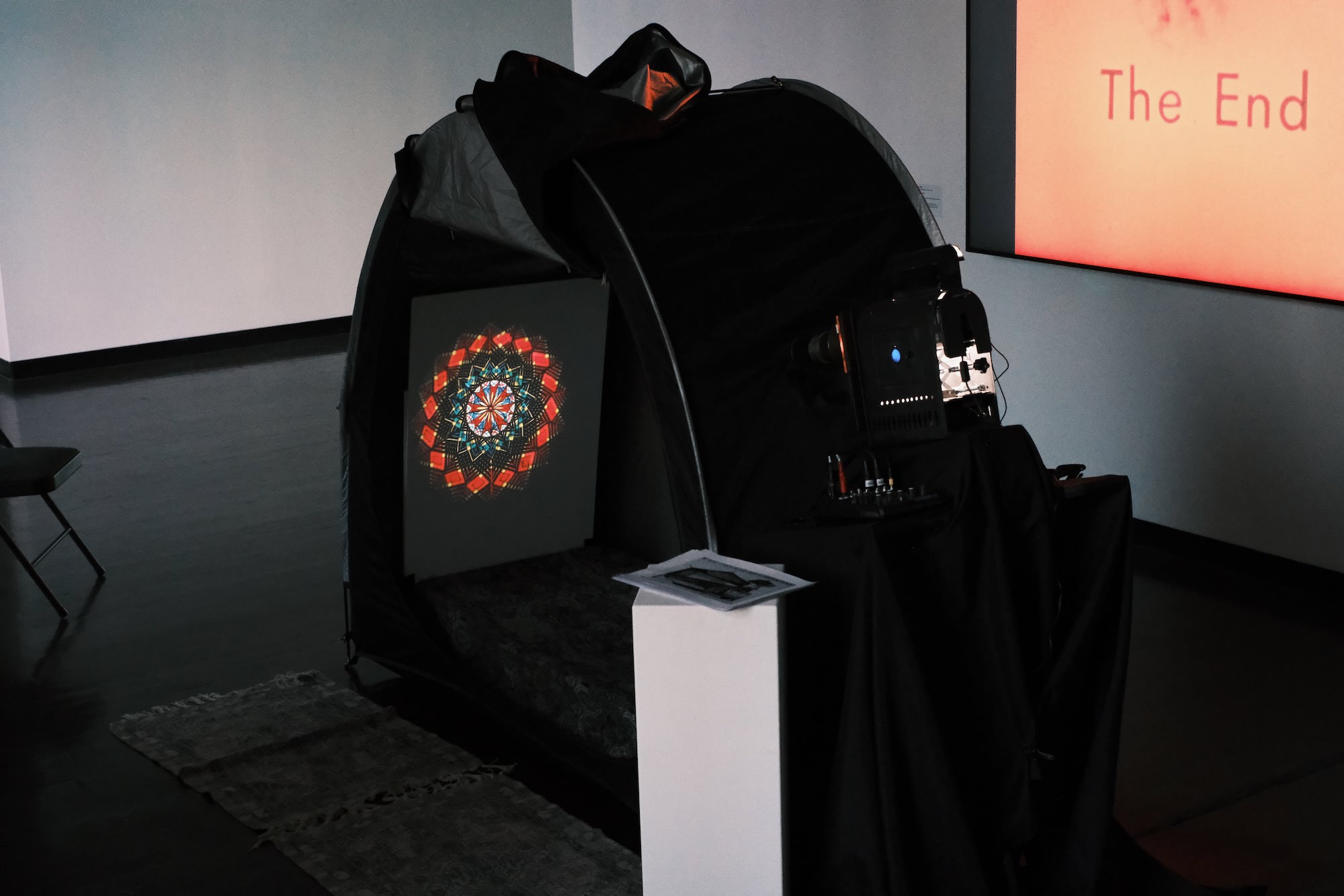
The original Dream Tent
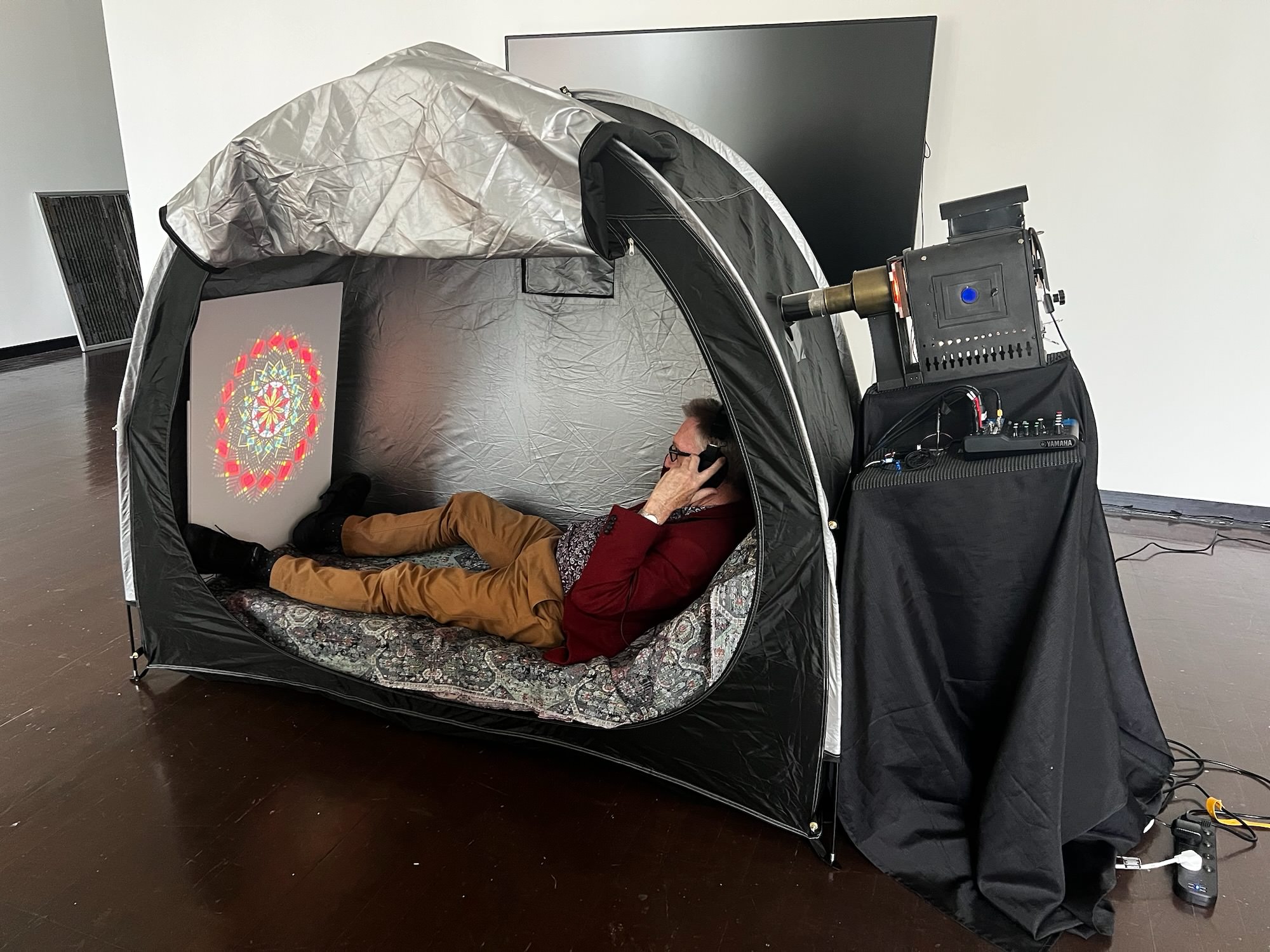
The Dream Tent is a reconstruction of an apparatus devised by the American neurologist James Leonard Corning in 1899. As Martyn wrote, Corning theorised that the brain was “susceptible to chromatic and sonic vibrations in the drowsy state before sleep,” and built a device to explore this. Patients would recline wearing a padded helmet connected via tubing to a phonograph, and watch a motor-driven chromatrope project slowly rotating patterns of colour onto a screen before them. Corning reported treating conditions including “Matutinal Depression”, “Inertia”, “Insomnia”, “Morbid Dreams”, “Imperative Conceptions” and “Nervous Irritability”.
Martyn has written a longer account of the project covering the history, reconstruction, and experience of building it together. In our version, the chromatrope is a faithful reconstruction using authentic magic lantern technology. Visitors remove their shoes, recline on a low couch, put on headphones, and spend a few minutes immersed in colour and sound.
Designing a soundtrack for an installation
Previous work with Martyn have been tightly scripted magic lantern performances with live music, narration, and carefully sequenced slides. As an installation, the Dream Tent was a different challenge with visitors arriving when they like, spending as long as they like. The soundtrack needed to run continuously, evolve slowly, and never feel like it had started or ended.
The acoustic dimension of Corning’s original was the wax cylinder phonograph, a physically rotating mechanical sound source. I wanted to honour that quality but rather than composing a fixed piece, I built a generative system that uses interlocking slow-moving cycles (I imagine them as big “wheels”) to drive layers of synthesis and musical events. Each wheel is a low-frequency oscillator (LFO) operating on a different timescale, gradually modulating amplitude, pitch, and timbre across multiple synthesiser layers. The effect is something that breathes and shifts over long periods without ever arriving at a clear beginning or end; an acoustic parallel to the chromatrope that endlessly turns via it’s electric motor.
Bela and Pure Data
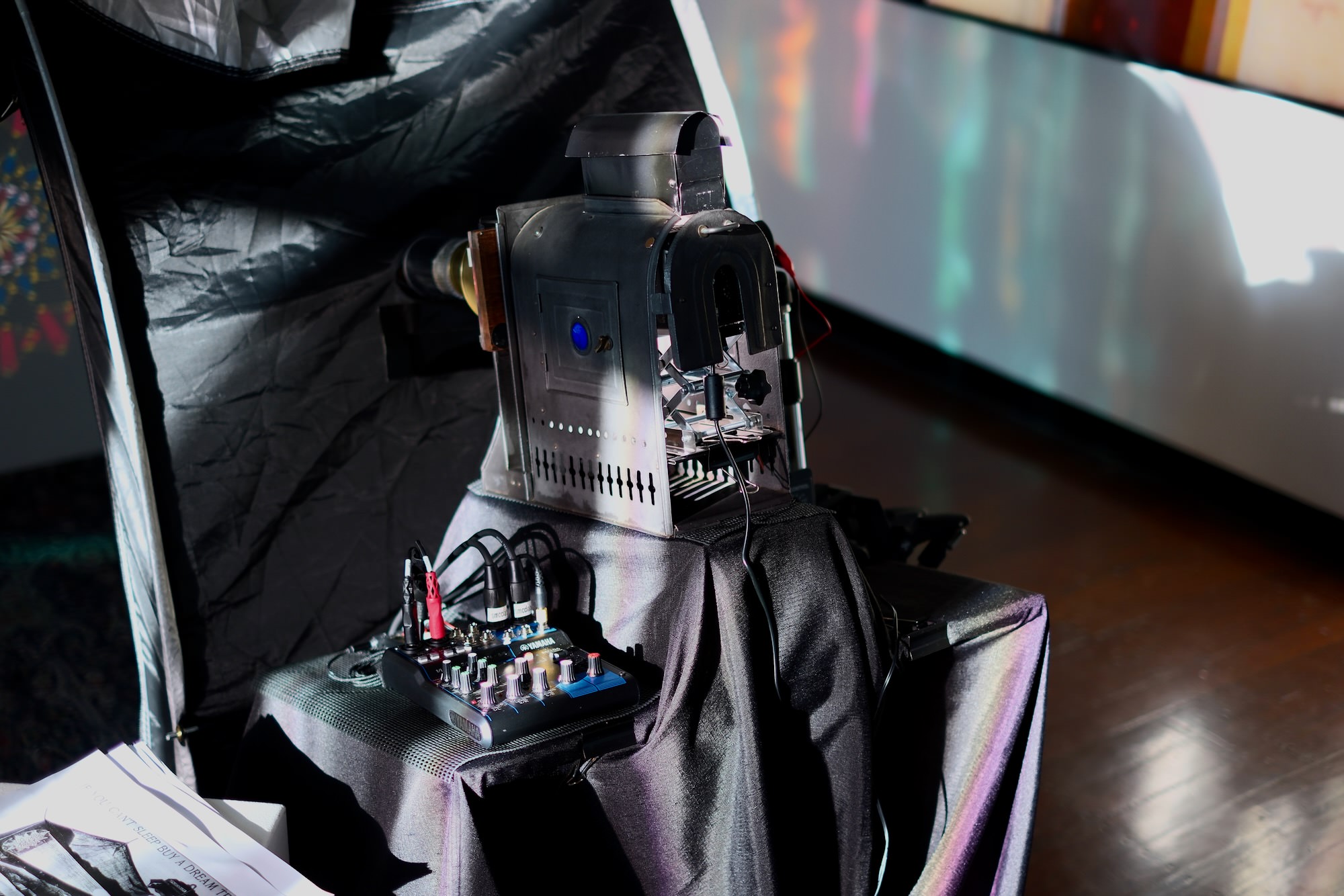
The soundtrack runs on a Bela Mini, a small, low-power embedded audio computer designed for real-time audio work. Bela boots directly into the audio patch with no operating system overhead, which means it can run for hours without attention and automatically restart in case of incidental interference (e.g., being uplugged momentarily) that might trouble a laptop.
The patch itself is written in Pure Data and lives in the dream-tent-soundtrack repository. The synthesis draws on FM synthesis and detuned supersaw layers, tuned to mixolydian scales that suit the archaic and dreamlike quality we were after. Delay and reverb blur the edges of events into one another. The LFO wheels govern which events fire and when layering a gentle randomness on top of the slow cycles, so no two visitors hear quite the same texture.