Experimenting with Intelligent Synths and AI in a MIDI Plug
26 Feb '24
I’m back at work for a research-focussed year and getting back to the Intelligent Musical Instruments theme that I set for my lab.
One of the limitations of my previous work was that connecting IMPS to synth software was a fairly involved process. IMPS communicates with OSC messages and the assumption was that the musician would be designing a custom computer music instrument at the same time as training a machine-learning model.
Some of the most compelling IMPS work was the EMPI project involving an embedded and self-contained musical instrument running on a Raspberry Pi.
What I’ve been trying this year is to get IMPS working (again) on a Raspberry Pi, and communicating via MIDI with regular synthesisers.
One of the motivators here was discovering that IMPS should work a bit more easily on 64-bit Raspberry Pi OS and that the Raspberry Pi Zero 2 W could work as a way to encapsulate IMPS in a very small and low-powered package.
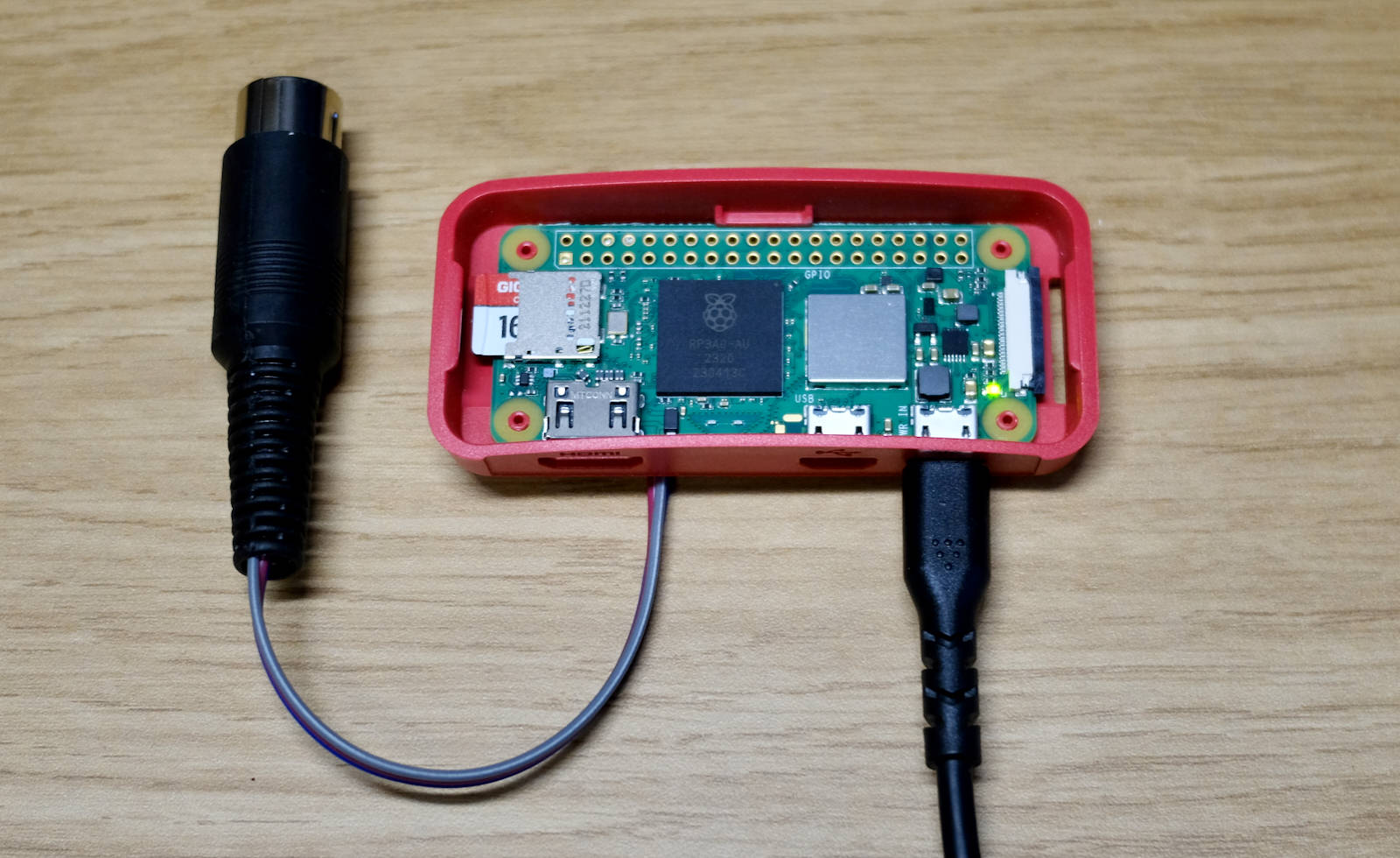
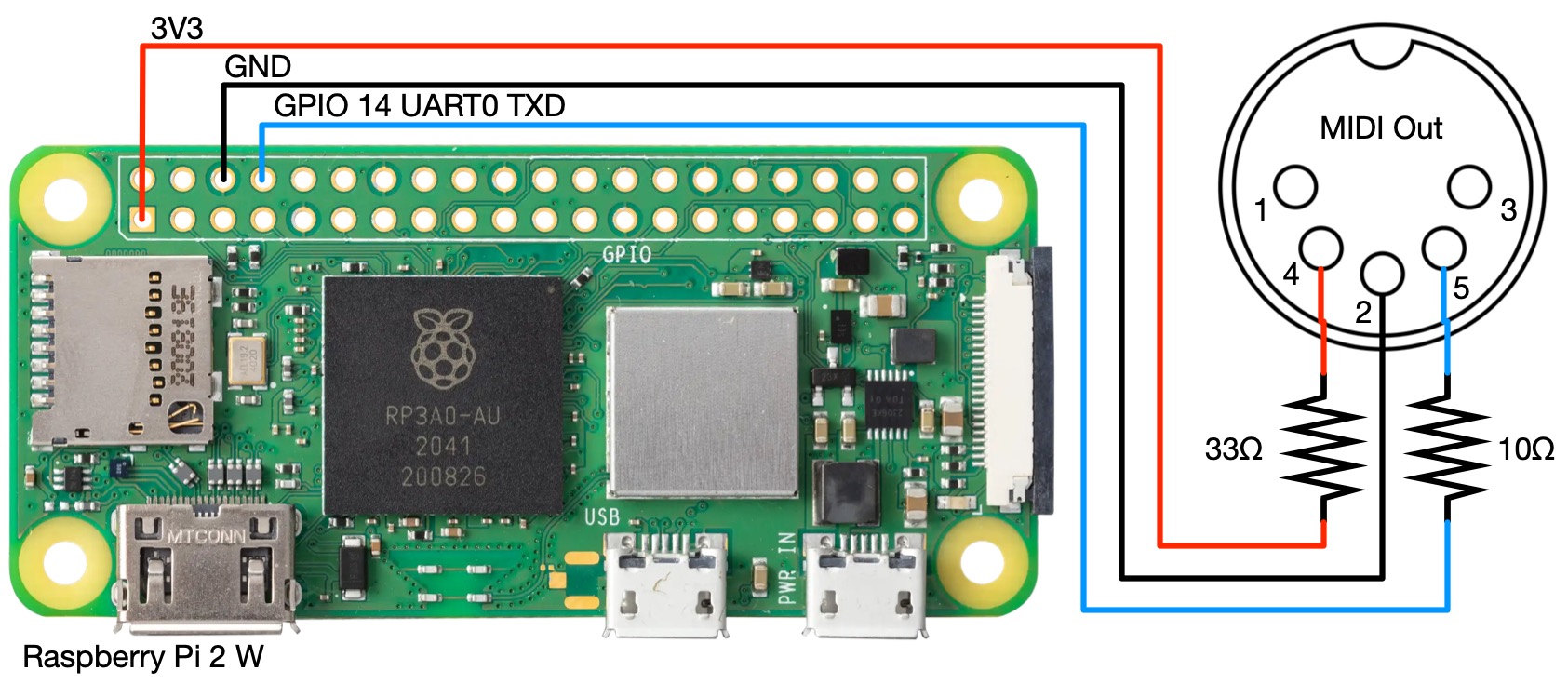
With a Raspberry Pi, you (strictly speaking) might not even need an external MIDI interface as you can get a MIDI signal straight off the Pi’s serial GPIO pins.
As an initial demo I connected a (somewhat refactored) IMPS Raspberry Pi to a Korg Volca FM.
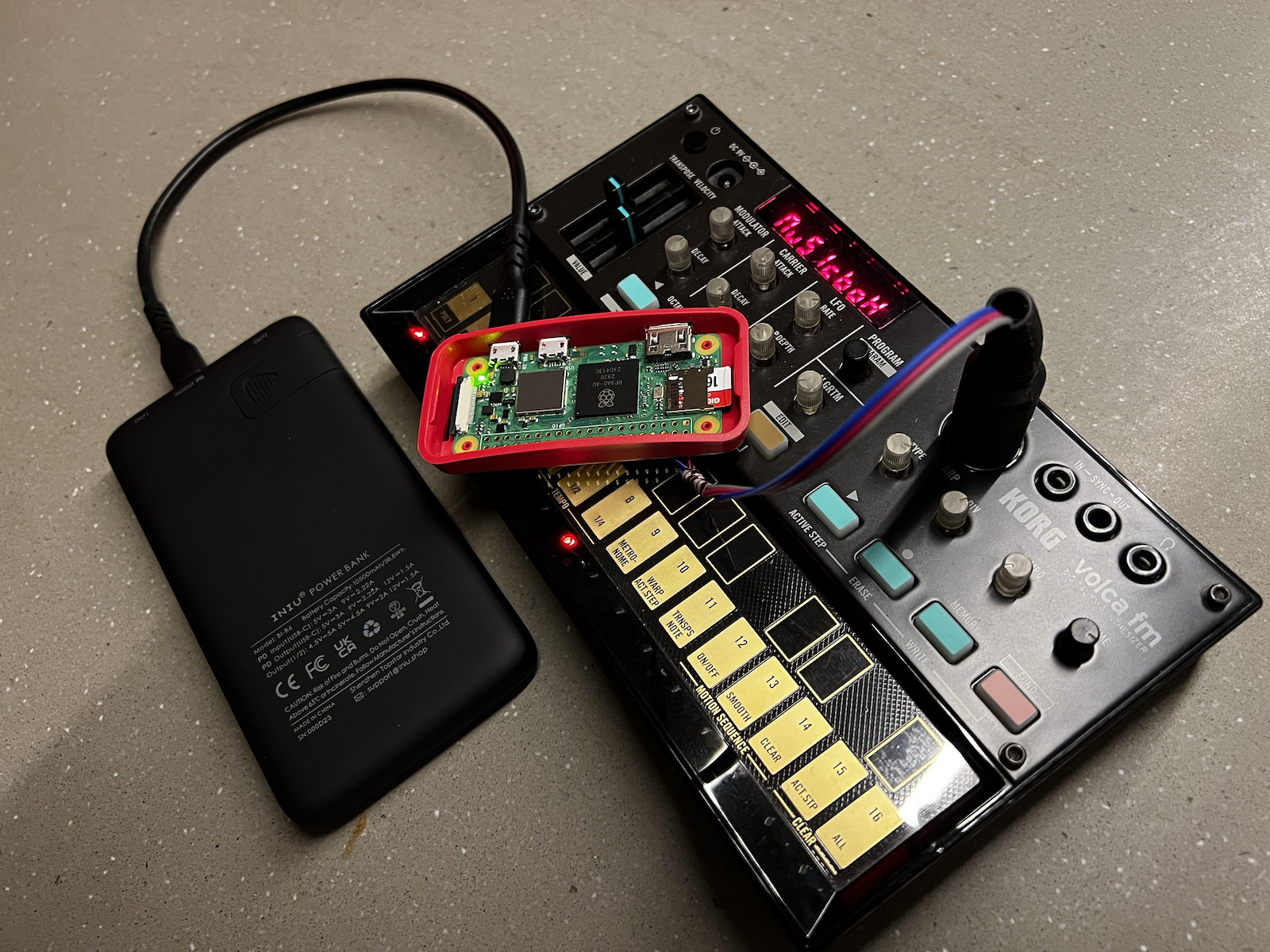
The Volca FM is squeaky, self-contained, and reasonably fun to experiment with. So far, I’ve only got a MIDI out on the Raspberry Pi so the interaction is one way between the Pi and the Volca.
Here’s a video with the volca demonstrating this idea. In this video, I explored the name “GenAI MIDI plug” for this idea, thinking of encapsulation to something that is close to a MIDI plug as the important part of this project.
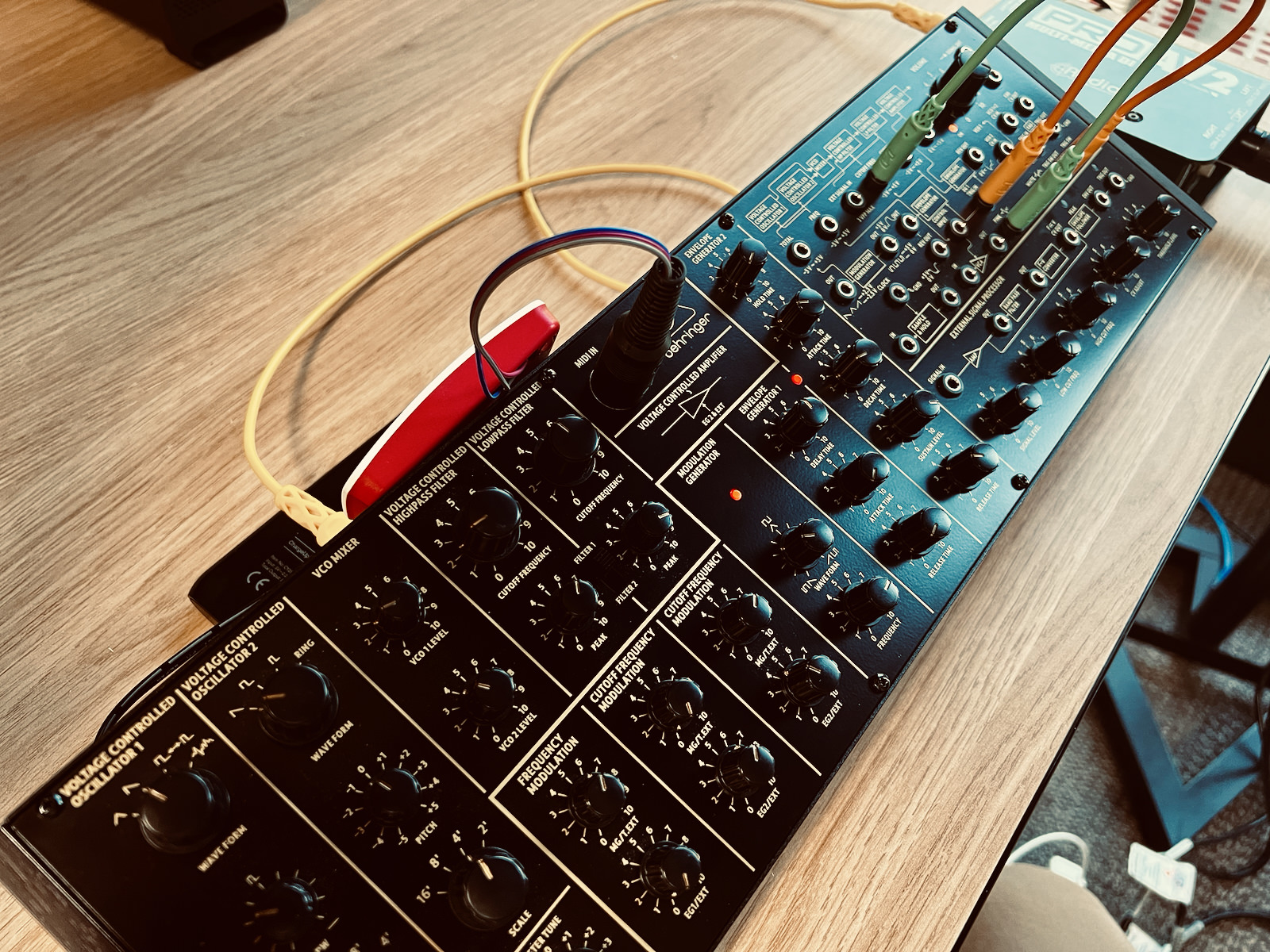
Extending this idea, I connected the system to a Behringer K-2 synth. The Pi Zero 2 W actually fits right behind the synth. This suggests incorporating the Pi Zero into lots of different synths to start to explore many intelligent instrument designs.
Edit: This work is (so far) exploratory but I’ve written up some of the early thought processes in a workshop paper for GenAICHI 2024: